What is a “Social Enterprise?” A beginner’s guide to doing good from day one
“Social Enterprise” is one of those terms that sounds important… but also kind of vague.
You might’ve heard it used in a bunch of different ways:
At a conference
In a funding application
On LinkedIn (with zero explanation 🙃)
And depending on who you ask, you’ll get a slightly different answer.
That gray area? It can feel uncomfortable — especially if you’re someone who likes clarity, structure, and knowing you’re “doing it right.”
So let’s see what we can do to clear it up!
The SEA Change definition
There are a bunch of awesome definitions out there - and none of them are wrong! We noticed they all have two things in common, so at SEA Change, we define it like this:
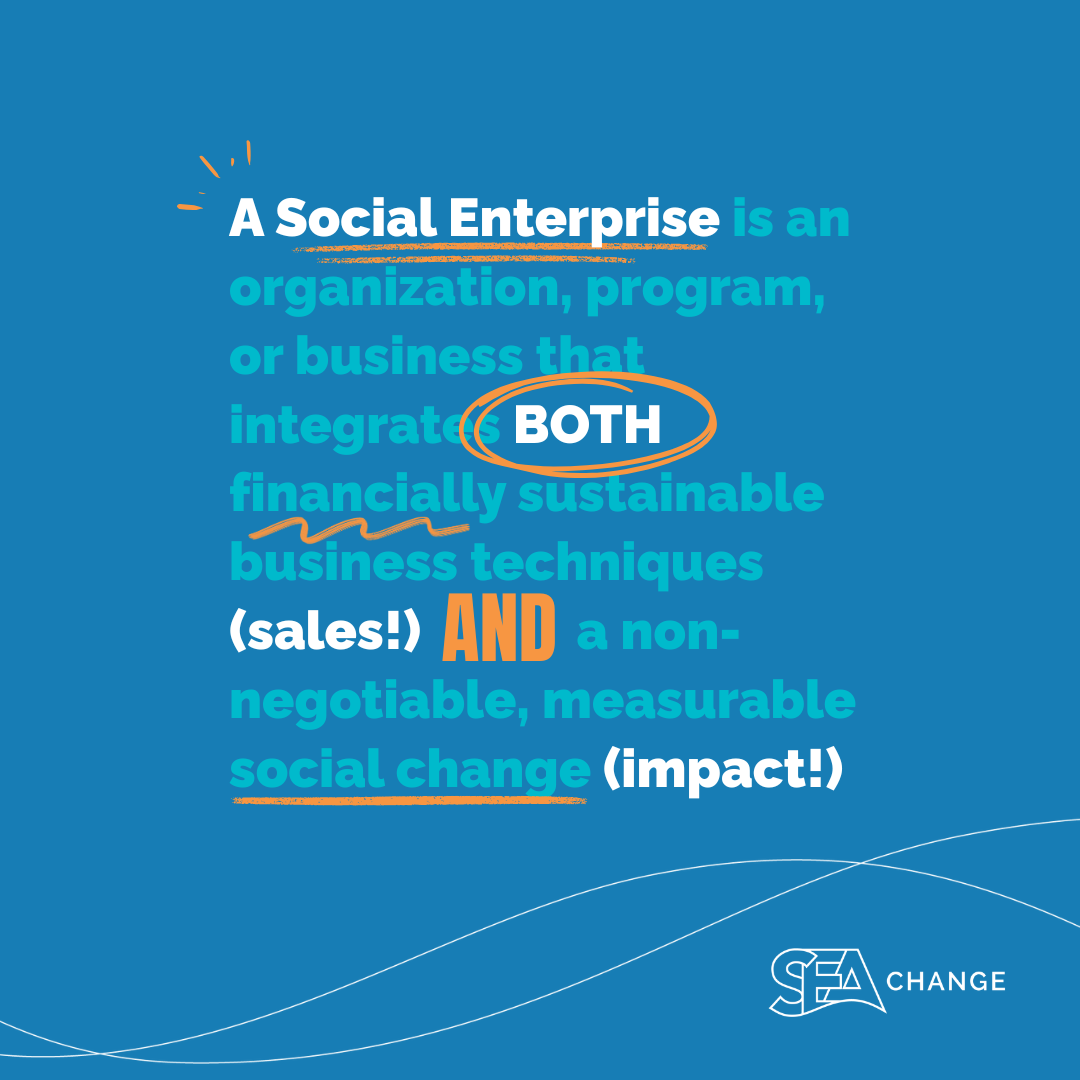
A Social Enterprise is an organization, program, or business that integrates BOTH financially sustainable business techniques (sales!) AND a non-negotiable, measurable social change (impact!).
Let’s break that down:
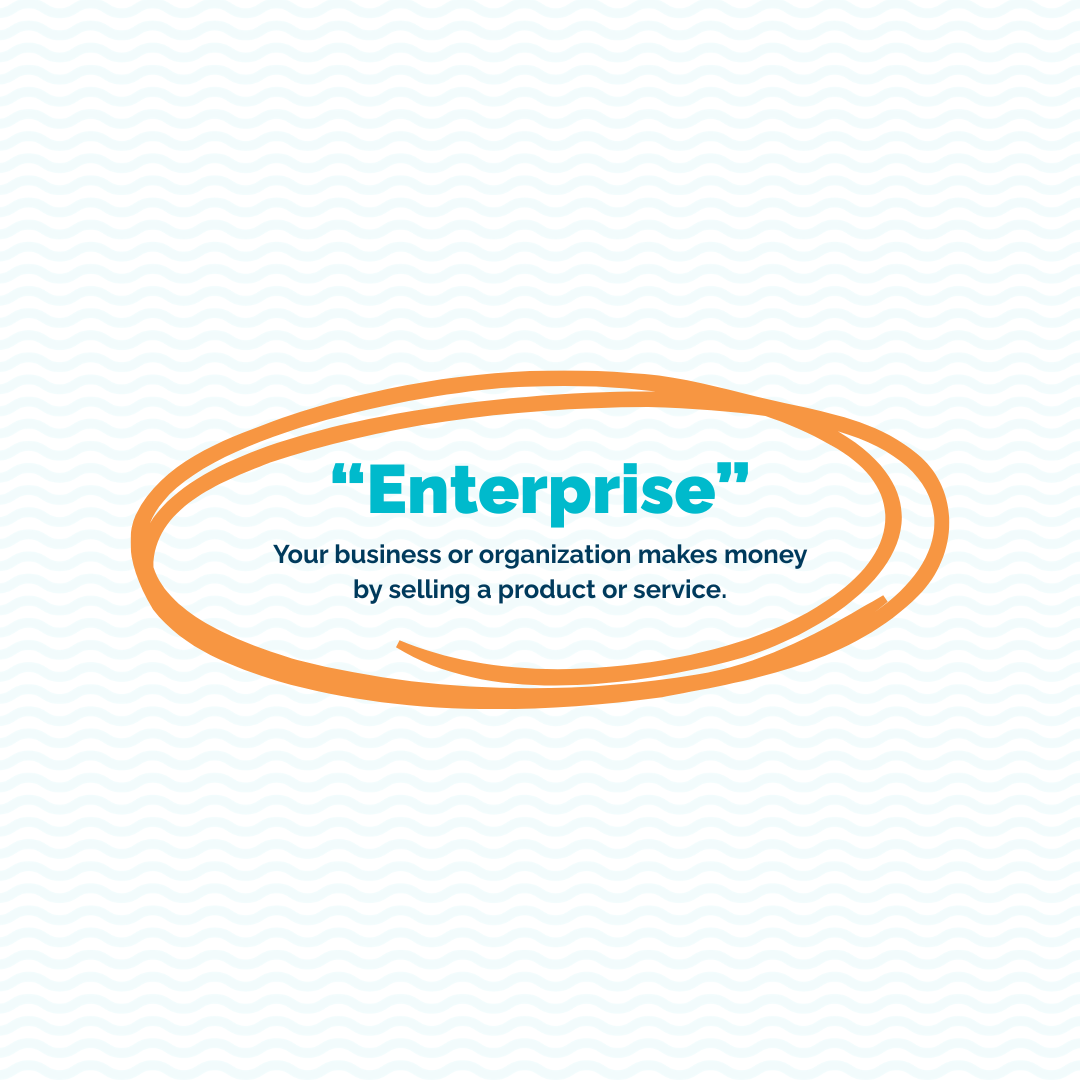
Financially sustainable (sales!) → You make money through selling your product or service
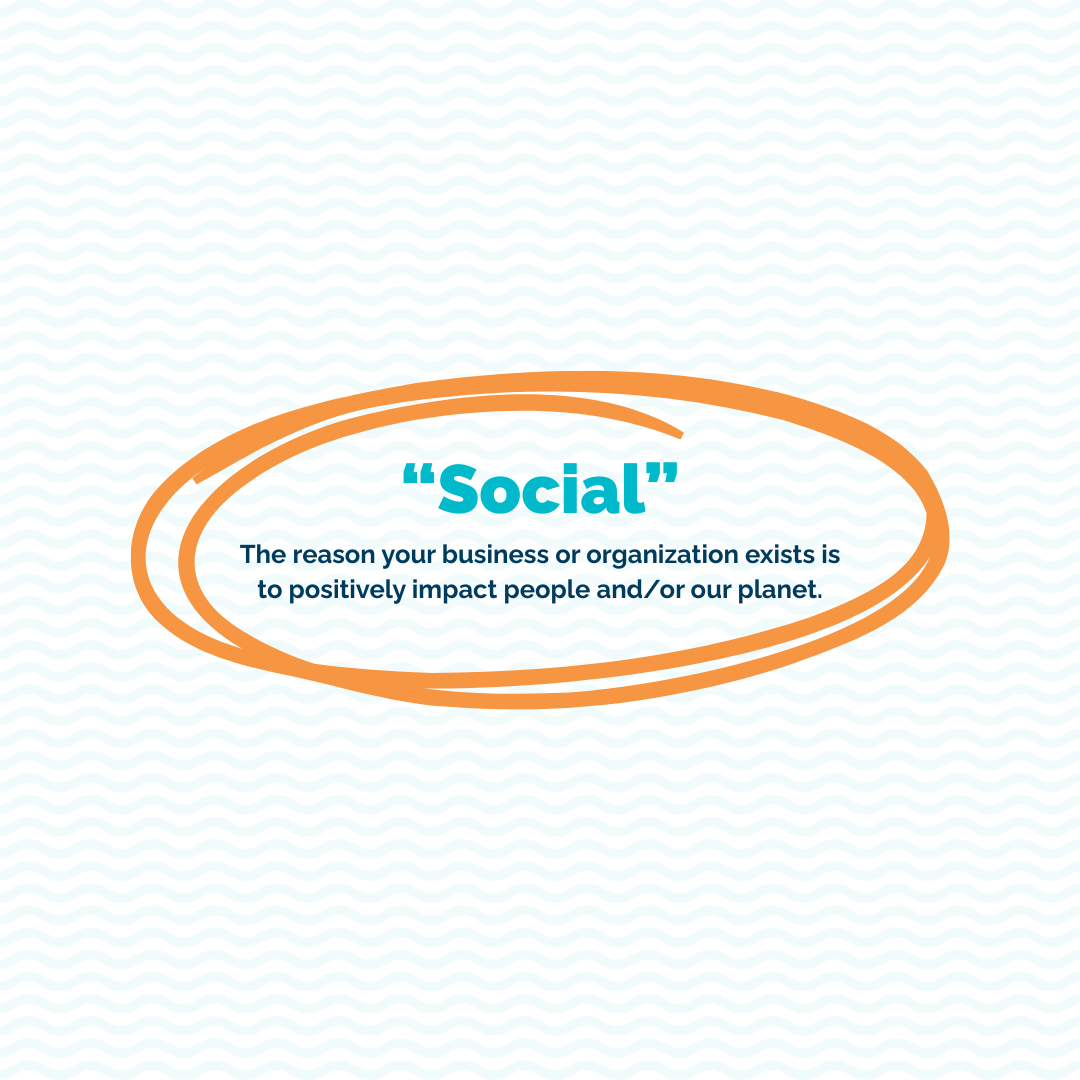
Non-negotiable social change (impact!) → The good you do isn’t optional, seasonal, or “extra” — it’s the reason your business exists
Both have to be present. Not one. Not the other.
Both.
Why this feels so confusing
Part of the confusion comes from the fact that “Social Enterprise” is not a legal label.
There’s no box you check when you register your business.
No universal certification required.
No single governing body defining it.
That means:
People use the term loosely
Definitions vary
A lot of businesses sound like Social Enterprises… but aren’t
And a lot of businesses are Social Enterprises… but don’t know it
Which brings us to something just as important as what it is 👇
What a Social Enterprise is NOT
Let’s clear up a few common misconceptions:
❌ It’s NOT a legal structure
You can be an LLC, nonprofit, for-profit, hybrid — any structure.
Social Enterprise is about how you operate (your business model), not what paperwork you file.
❌ It’s NOT Corporate Social Responsibility (CSR)
Donating a portion of profits.
Volunteering once a year.
Running a feel-good campaign.
Those are great things — but they’re add-ons.
A Social Enterprise is different.
👉 The impact is not an add-on. It’s the reason your business exists.
❌ It’s NOT “profit first, impact later”
If the plan is:
“We’ll make money now and give back later…”
That’s not a Social Enterprise (yet).
In a Social Enterprise:
👉 You make money because you want to make an impact — not in spite of it.
The key question: WHY did you start?
If you’re unsure whether something is a Social Enterprise, start here:
👉 Ask: why did the founder start this in the first place?
Was it to:
Solve a specific social or environmental problem?
Serve a marginalized or disinvested group of people?
Change something that felt broken in our world?
Or was it primarily to generate revenue, with impact layered on later?
Here’s another way to think about it:
👉 If the impact was removed, would the business still do the same work?
If yes → impact is likely secondary
If no → now we’re getting into Social Enterprise territory
The founder’s why matters — a lot.
Get clear on your why
Module 1 of the SEA Change curriculum – “How will you change the world?” – is designed to help you get clear on your why. Because once your “why” is clear, everything else gets a whole lot easier.
So… what does “Social Enterprise” actually look like in practice?
This is where things usually click.
Because Social Enterprise isn’t just a definition — it shows up in how a business is built.
There are actually several different ways (or models) that businesses can bake impact directly into how they make money.
And once you see them, you’ll start noticing them everywhere.
👉 In the next post, we’ll break down exactly how a Social Enterprise works — including the most common business models and real-world examples.